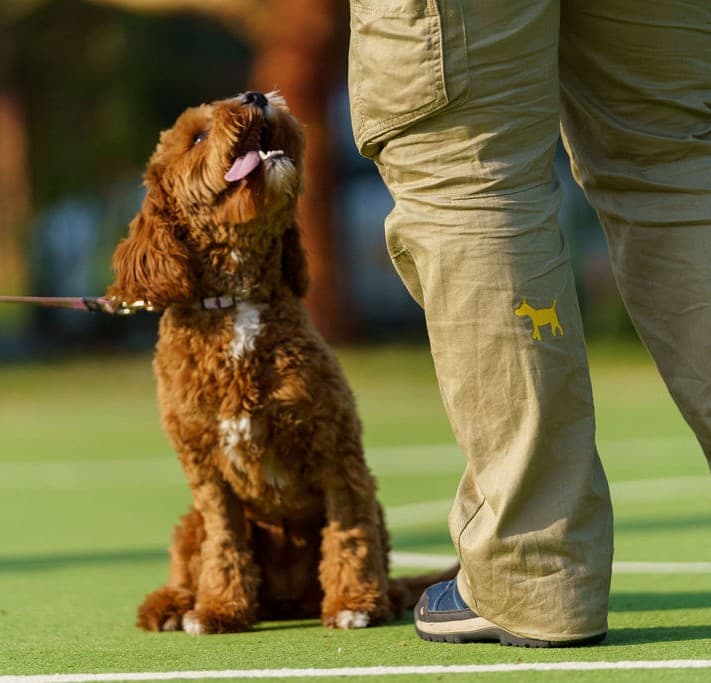


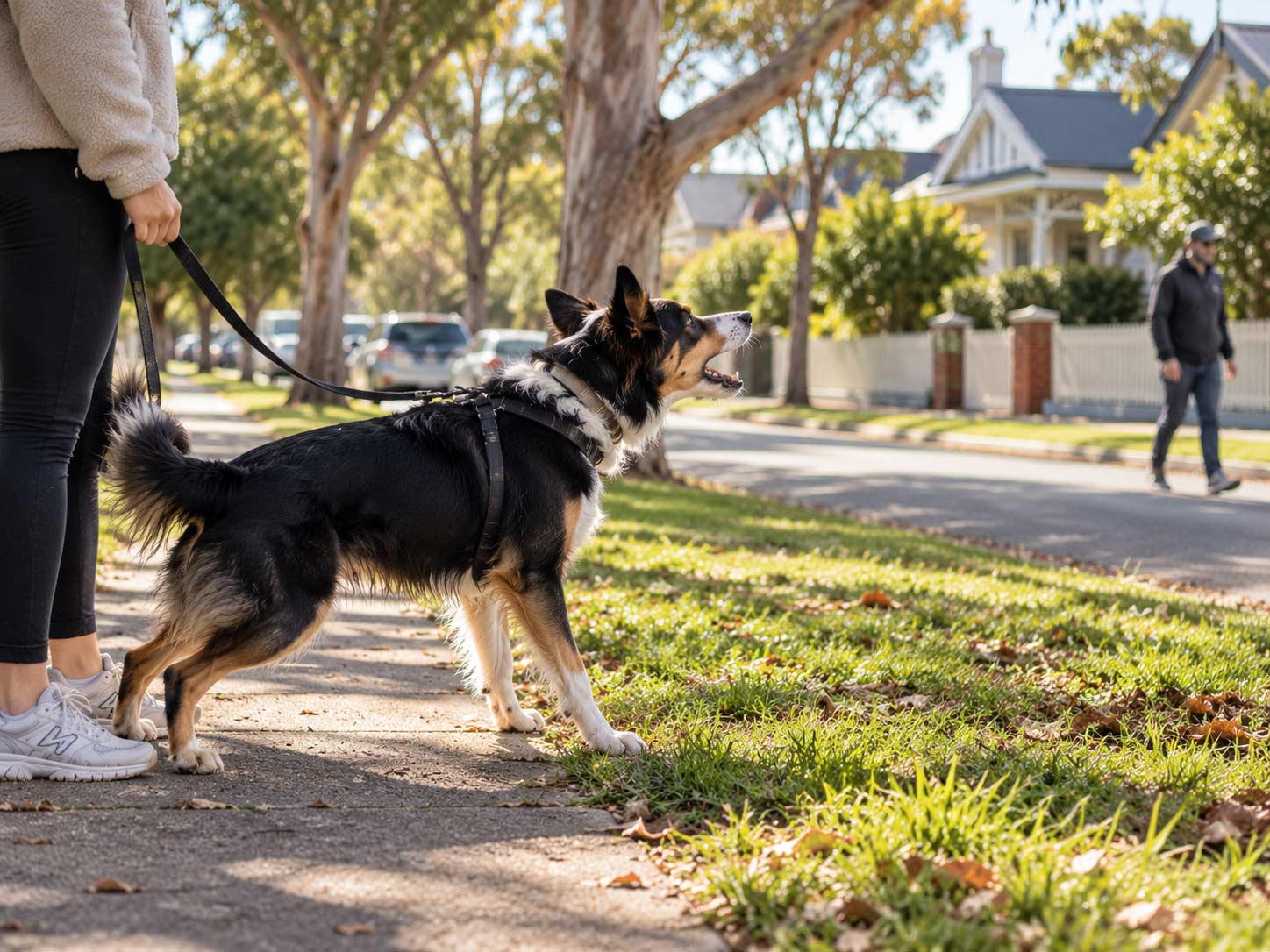
A dog that barks at every passer-by, every possum and every rattle of the neighbour’s bins can wear you down fast. If you are searching for how to stop dog barking, you are probably tired, a little embarrassed, and maybe worried about a note from next door. Take a breath. Barking is normal dog communication, and nuisance barking is one of the most fixable problems we see.
The key is working out why your dog barks before you try to stop it. The fix for a bored dog is very different from the fix for a frightened one. This guide walks you through the common causes, a simple quiet cue, and the everyday changes that bring the noise down for good.
Why Dogs Bark (and Why the Reason Matters)
Dogs bark to alert, to ask, to let off energy and to say “back off”. None of that is bad behaviour. It becomes a problem when the barking is frequent, long or out of proportion to the trigger.
Barking also tends to work for the dog. The postie leaves, so barking worked. You look up from the couch, so barking worked. Every time barking gets a result, the habit gets a little stronger. That is why shouting rarely helps. To your dog, you just joined in.
So before reaching for a fix, spend a few days as a detective. Note when your dog barks, what they are looking at, and what happens straight after. Patterns appear quickly.
The Four Common Types of Barking
Most excessive barking falls into one of four groups. Plenty of dogs mix two or more.
Alert and territorial barking
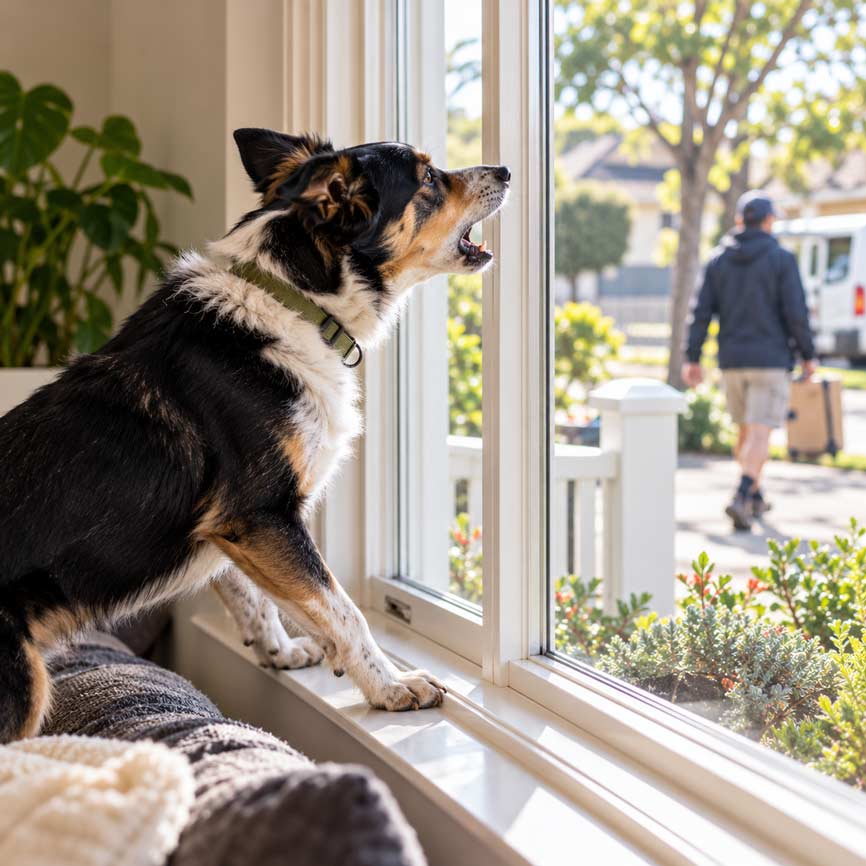
The doorbell, a dog walking past, a delivery van. Your dog is telling you something has arrived. It is usually loud, sharp and aimed at a window, fence or door, and it stops once the trigger has gone.
Attention and demand barking
This barking is aimed at you, often with direct eye contact. It shows up when you are on the phone, eating dinner or sitting down to relax. Your dog has learned that barking gets you to respond.
Boredom and frustration barking
Repetitive, rhythmic barking, often in the yard or after a quiet day. It points to unmet needs: not enough exercise, sniffing, play or problem solving.
Fear and reactive barking
Barking with a lowered body, raised hackles, backing away or lunging. Your dog is trying to make something scary go away, whether that is another dog, a stranger or a loud noise.
Barking that only happens when your dog is left alone, along with pacing, howling, chewing at doors or toileting inside, can be a sign of separation distress. That needs its own plan, and a trainer’s eye is worth having early.
Matching the Fix to the Cause
| Type of barking | What it usually looks like | Where to start |
|---|---|---|
| Alert | Aimed at a window, fence or door, stops when the trigger leaves | Block the view, reward calm, teach a quiet cue |
| Attention | Aimed at you, with eye contact, when you are busy | Ignore the bark, reward quiet, give attention before they ask |
| Boredom | Repetitive, in the yard or after a quiet day | More exercise, sniffing, enrichment and chew time |
| Fear | Lowered body, lunging or backing away | Add distance, pair the trigger with good things, get professional help |
None of these starts with punishing the bark. Spray bottles, shaking cans and bark collars might interrupt the noise for a moment, but they do nothing about the reason. For a fearful dog they can make things much worse, because the scary thing now comes with something unpleasant too. Our trainers use reward-based, force-free methods for exactly this reason.
How to Stop Dog Barking With a Quiet Cue
A quiet cue gives your dog something to do instead of barking. It works best for alert barking and is a handy tool for most dogs. Practise when things are calm first, then build up.
- Pick a word. “Thanks” or “quiet” both work. Say it once, calmly, in a normal voice.
- Wait for a pause. When your dog barks at a mild trigger, say your word and wait. The moment they stop, even for a breath, mark it with “yes” and give a small, tasty treat.
- Stretch the silence. Over several sessions, wait for two seconds of quiet, then five, then ten before you reward.
- Add a job. Ask for a sit, a down or a hand touch after the quiet, and reward that too. A dog cannot bark and chew a treat at the same time.
- Practise with set-ups. Ask a friend to knock on the door or walk past the fence, so you can rehearse at a level your dog can cope with.
Keep sessions short and upbeat. If your dog is too worked up to take a treat, the trigger is too close or too intense. Step back and make it easier.
Managing the Environment
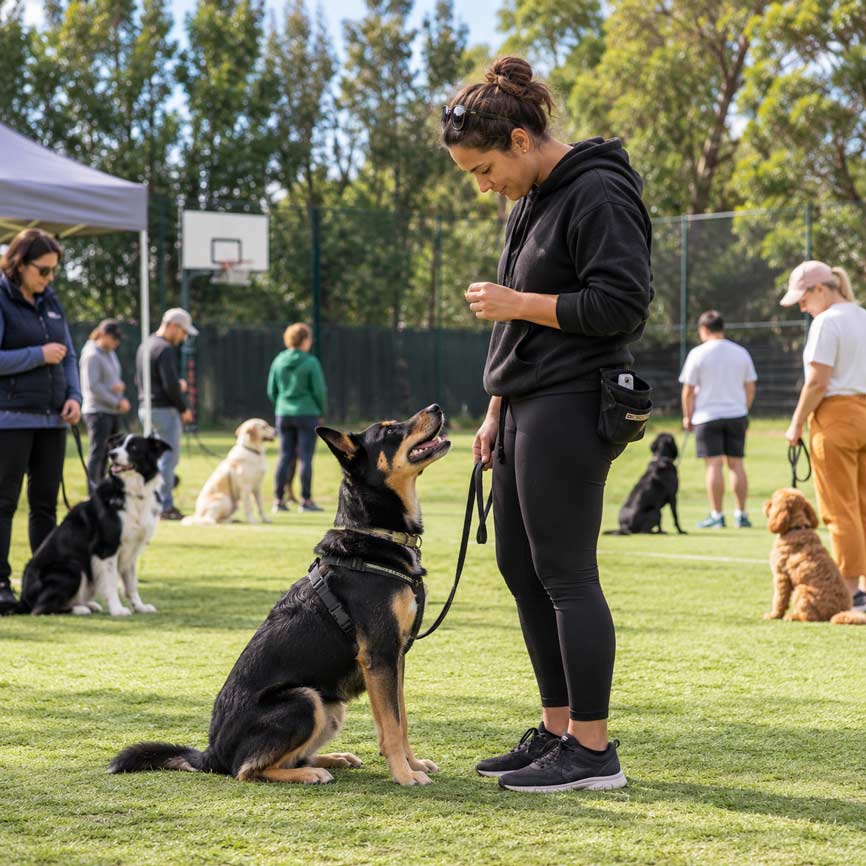
Training takes time. While you build new habits, cut down the number of chances your dog gets to practise barking. Every rehearsal makes the habit stronger.
- Block the view. Frosted film on the lower window panes, a closed blind or moving the couch away from the front window can cut alert barking dramatically.
- Add background sound. A radio or white noise softens street noise and passing footsteps.
- Fill the day. A sniff walk in the morning, a food puzzle or lick mat, and a chew before you leave all help a bored dog switch off.
- Manage the yard. A dog left alone in the yard all day often patrols the fence line. Bringing them inside, or blocking access to the busiest stretch of fence, makes a big difference.
- Give attention first. Short bursts of play and training before you sit down reduce demand barking later.
Dog barking at night
Night-time barking usually comes from possums, wildlife, unfamiliar sounds or a dog sleeping somewhere too exposed. Bringing your dog inside overnight, a covered crate or bed in a quiet room, and a toilet trip and wind-down before bed solve most cases. If night barking starts suddenly in an older dog, check in with your vet, as pain or confusion can play a part.
When Barking Signals Something Bigger
Some barking needs more than a quiet cue. Reach out for help if:
- your dog lunges, growls or snaps as well as barks
- the barking happens mainly when your dog is left alone
- the barking started suddenly, or your dog seems unwell or sore
- you have trained consistently for a few weeks without progress
- a neighbour or your local council has raised a complaint
None of these mean you have failed. They mean your dog needs a plan built around their specific triggers, and that is where a trainer earns their keep.
Your Next Step: Private or Obedience Training

Because barking is so closely tied to its cause, one-on-one help is often the fastest route. In private dog training sessions, a nationally accredited trainer watches your dog, pins down the triggers and builds a step-by-step plan you can follow at home. Sessions run onsite in Ormond, Carnegie and Caulfield North, or at your home, right where the barking happens.
If your dog struggles to settle or listen around distractions, structured obedience training for dogs builds the focus and calm that make a quiet cue stick. Dogs aged six to 18 months often do well in adolescent training too, as barking can spike during the teenage stage.
Not sure which path suits your dog? An online consultation for your dog is a simple way to talk it through with a trainer first.
Frequently Asked Questions
How long does it take to stop a dog barking?
Most owners see a change within two to four weeks of consistent training and management. Long-standing or fear-based barking can take longer, and progress is rarely a straight line. Short, regular sessions beat occasional long ones.
Should I use a bark collar?
We do not recommend them. Spray, sound and static collars punish the noise without changing why your dog barks, and they can increase fear and stress. Reward-based training and good management deal with the cause and protect your bond with your dog.
Why does my dog bark at nothing?
Your dog is almost always reacting to something you cannot hear or smell, such as a possum on the roof, a dog two streets away or a high-pitched sound. Keep a short log of when it happens. Patterns usually point to the trigger.
Is it okay to ignore my dog’s barking?
It works for attention barking, as long as you also reward quiet. It does not work for alert, fear or boredom barking, because the reward comes from somewhere other than you. Match your response to the type of barking.
Can an older dog learn to stop barking?
Yes. Dogs of any age can learn a quiet cue and new habits. Older dogs may need a little more patience, and a vet check is wise if the barking is new.
What can I do if my neighbour complains about my dog barking?
Talk to your neighbour, let them know you are working on it, and ask when the barking happens, since you may not be home to hear it. Then start on management and training straight away. If a complaint has gone to council, a training plan from a qualified trainer shows you are taking it seriously.